
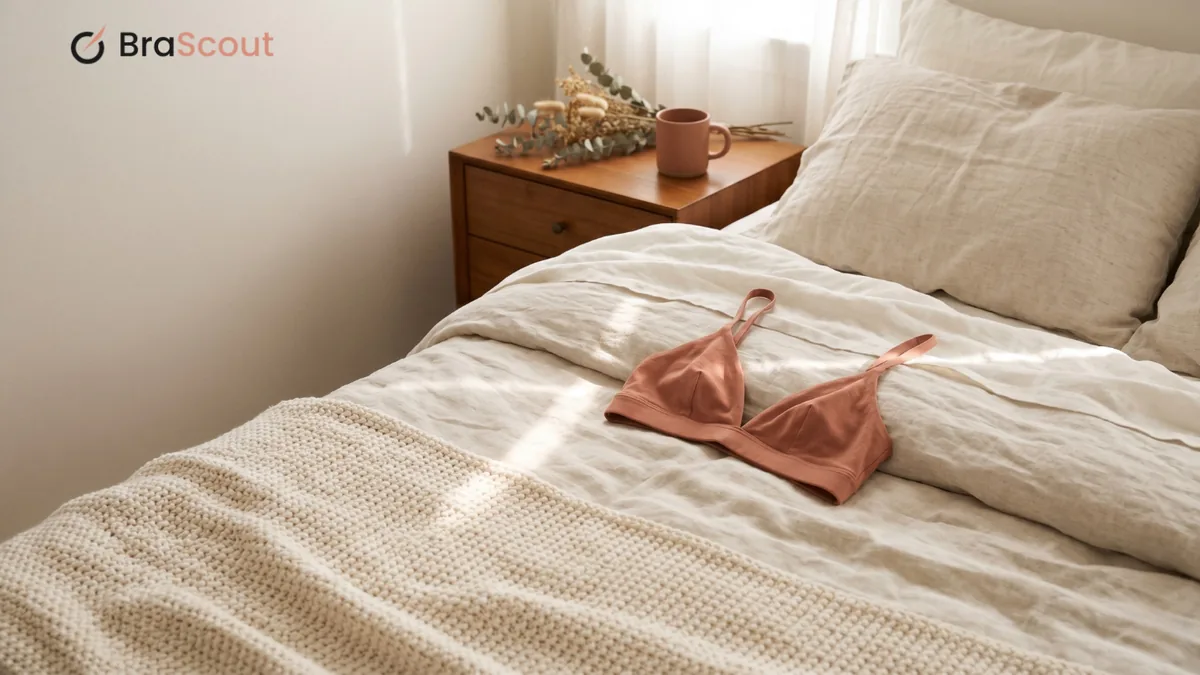
Should You Wear a Bra to Bed? Two Myths, Both False
It's 11:47pm. You're three-quarters asleep, and you're facing one of womankind's eternal questions: do you drag yourself up and take the bra off, or do you simply… accept your fate and sleep in it? Somewhere in the back of your half-conscious mind, two voices are arguing. One insists sleeping in a bra keeps everything lifted and perky. The other — probably an aunt, via a forwarded Facebook post — warns it'll give you cancer. Here's the thing: they're both wrong, and you can stop letting either one boss your bedtime around. Let's clear up what's actually true about wearing a bra to bed, minus the myths and minus the fear.
First, the scary one: no, it does not cause cancer
Let's deal with the frightening myth straight away, because it's the one that deserves the least airtime. Wearing a bra to bed — or wearing a tight one, or an underwire one — does not cause breast cancer. The National Breast Cancer Foundation is unambiguous about this: compression from a bra band or wire does not cause cancer or raise your risk. Whatever you read in a chain post, sleeping in a bra is just sleeping in a bra. You can let that worry go completely.
And the hopeful one: no, it doesn't prevent sagging either (sorry)
This is the myth people actually act on — suffering through the night in a structured bra because they've been told it keeps things perky. It doesn't, and here's why. Your breasts are held up by a network of connective fibres called Cooper's ligaments, and "sagging" is simply those ligaments lengthening over time. What stretches them is the long game: genetics, ageing, years of gravity, pregnancy, weight changes, and — the one a bra does help with — repeated unsupported bouncing during high-impact exercise. But none of that is happening while you're horizontal and asleep. Lying down, there's barely any gravitational load on those ligaments for a bra to counter. So a sleep bra does next to nothing for sagging. And the flip side is just as true: going braless to bed won't cause you to sag. You can put the overnight underwire down.
The short version: a bra fights sagging during a run, not during a nap. Eight hours lying down isn't a fight your Cooper's ligaments are having — so the bra has nothing to do there.
So… should you, or shouldn't you?
With both myths cleared, the honest answer is gloriously boring: it's entirely a comfort call, and whatever you prefer is correct. Some people genuinely sleep better in a soft bra — often those with larger busts, who find a gentle bra cuts down on night-time movement and just feels more secure and comfortable. Others find any bra overnight restrictive and too warm and can't wait to get it off. Both are completely valid. There's no health gold star for either team. Do what lets you actually sleep.
(One exception worth naming: if you've had breast surgery, or any medical situation, follow your own surgeon's or doctor's guidance over any general rule — including this article.)
If you do sleep in one, do it right
Here's where it can actually go wrong — not from sleeping in a bra, but from sleeping in the wrong one. The thing to avoid is anything tight or rigid worn for hours on end. So:
- Skip the underwire. A rigid wire pressing into your tissue and ribs for eight hours means pressure marks and discomfort, for zero benefit. Save it for the day.
- Go soft and stretchy. A dedicated sleep bra or a stretchy bralette moves with you instead of bracing against you. This is exactly the kind of soft, wire-free thing it's built for.
- Mind the band. It should feel gentle, never digging. If you wake up to red grooves you have to massage out, it was too tight to sleep in.
- Pick a breathable fabric. A hot, tight bra traps sweat against your skin all night, which is a fast track to irritation under the band. Cotton or bamboo lets things breathe.
Basically: the gentlest bra you own, or nothing at all. Anything in between that leaves a mark is working against you.
Even a sleep bra fits better when you know your size
A soft bralette in the wrong band still rides up and digs in all night. Find the size your body's actually asking for — free, in about two minutes — and even your comfiest bras get comfier.
Find my sizeSoft, seamless, wire-free styles made for lying down, not structure:
BraScout may earn a commission if you buy through these links, at no extra cost to you. See our Affiliate Disclosure.
Keep reading:
- A hot, tight bra overnight is a fast track to irritation → Bras for Sensitive Skin
- Even a sleep bra should pass the basics → How to Tell If Your Bra Fits
- A soft bralette still needs the right band → How to Measure Your Bra Size
Frequently asked questions
Is it bad to wear a bra to bed?
No. Sleeping in a bra is a comfort choice, not a health hazard — as long as the bra is soft and not tight. It doesn't harm you. Wear one to bed if it feels comfortable and secure, and skip it if it doesn't. There's no wrong answer.
Does sleeping in a bra prevent sagging?
No. Sagging happens as the breast's Cooper's ligaments stretch over time, driven mostly by genetics, ageing, gravity over the years, pregnancy and weight changes. Lying down at night puts almost no load on those ligaments, so a sleep bra does essentially nothing to prevent sagging. Going braless to bed doesn't cause sagging either.
Can wearing a bra to bed cause cancer?
No. According to the National Breast Cancer Foundation, compression from a bra band or underwire does not cause breast cancer. The idea that sleeping in a bra or wearing a tight one raises cancer risk is a myth with no basis.
What kind of bra is best to sleep in?
A soft, wire-free, non-compressive one — a dedicated sleep bra or a stretchy bralette in a breathable fabric. Avoid underwire and any tight band. If it leaves deep red marks or you have to peel it off in the morning, it's too tight to sleep in comfortably.