

Why Your Bras Betray You Once a Month — and the Period-Bra Fix
Let's set the scene we all know too well. It's the week before your period. You put on the same bra you wear every other week of your life — the reliable one, the one with no opinions — and somehow, overnight, it has transformed into a medieval restraint device. The band is pressing charges. The wire is filing a formal complaint. And your breasts, sore and suddenly a full size bigger, are staging a loud protest of their own. You stand there genuinely wondering whether you've gained weight in exactly one body part in exactly seven days. You haven't. This is your cycle, it is completely normal, and — good news — it's fixable. Here's what's actually going on, and the one small thing that makes that week survivable.
No, you're not imagining it — your breasts really do change size every month
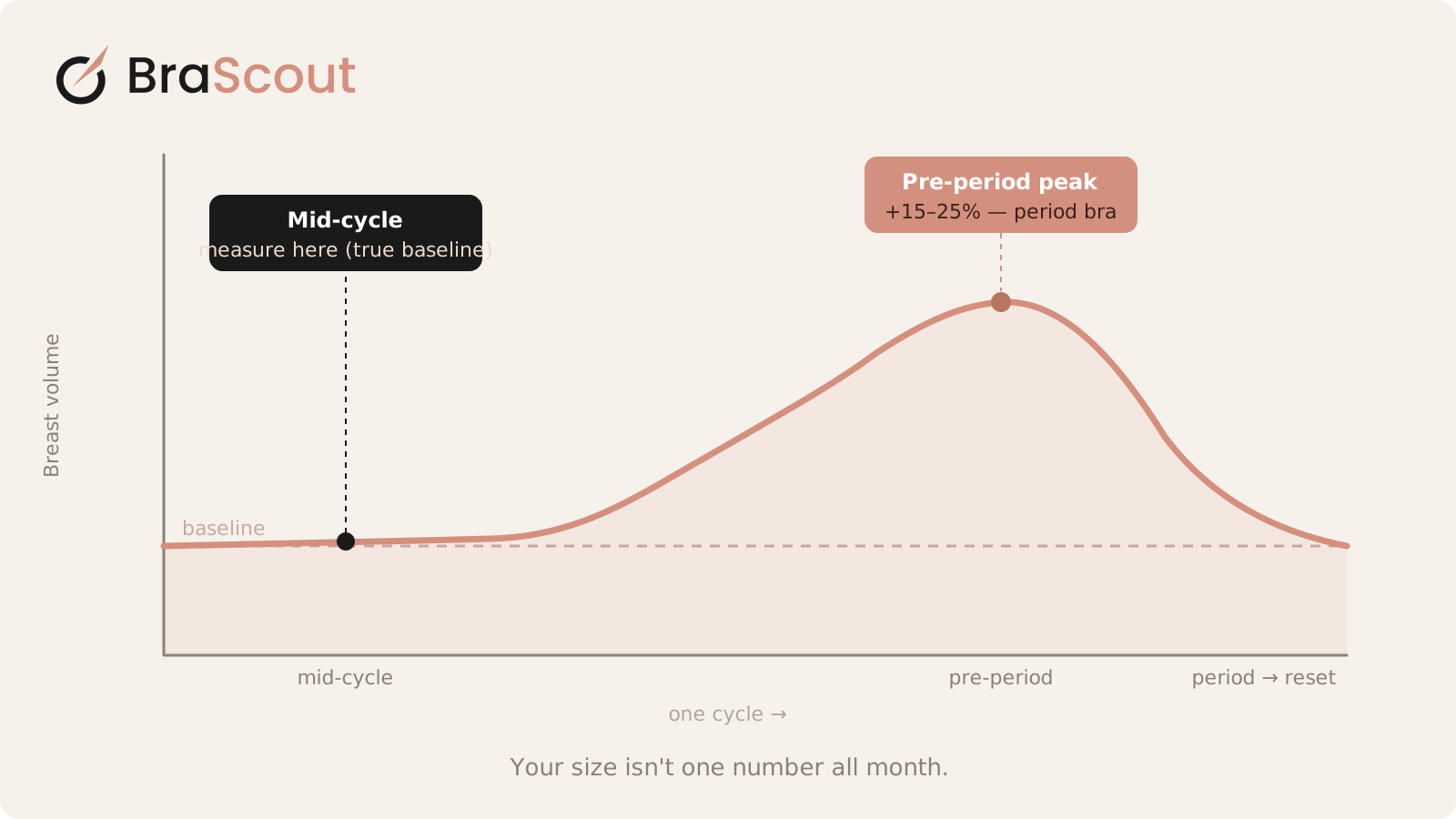
Here's the part nobody told us in school. In the luteal phase — roughly the week before your period — your hormones trigger fluid retention, and a chunk of that fluid lands in your breast tissue. They swell, they get tender, they feel heavier, and the change can be genuinely significant: for many people, breast volume rises by something like 15 to 25% before a period. That's not a rounding error. That's the difference between a bra that fits and a bra that feels like it's auditioning to hurt you. Then your period starts, the fluid recedes, and a few days later everything's back to baseline — until next month, when the whole show runs again.
Up to roughly a quarter more volume, every single month, in the same cup that fit perfectly two weeks ago. Of course it overflows. The bra didn't change — you did, temporarily, exactly the way you're supposed to.
Why your favourite bra suddenly feels like a punishment
It's simple physics once you know the cause. More volume in a cup that hasn't grown means the tissue has nowhere to go but up and over — hello, overflow and the dreaded quad-boob, in a bra that was flawless last week. At the same time, the tissue itself is sore and tender, so the firm band and the rigid underwire that you normally don't even notice are now pressing on tissue that's actively complaining. White-knuckling through it in your regular bra just earns you a week of red marks, soreness and a foul mood. There's a far easier answer than gritting your teeth.
The fix: keep one bra for the soft week
You don't resize your whole life around seven days. You just keep a bra (or two) built for this week and ignore them the rest of the month. Think of it as the comfy-leggings equivalent for your chest — not your support workhorse, your soft-week bra. What to look for:
- Wire-free. No rigid wire pressing into tender tissue. This is the big one.
- Stretchy, in every direction. An elastane-rich, multi-directional-stretch fabric flexes with the swelling instead of fighting it. A good bralette is built exactly for this.
- A little roomier. Roughly a cup's worth of extra volume, so there's somewhere for the tissue to go.
- A soft, wide band. This week is about gentle comfort, not lockdown — go easy on yourself.
One soft bralette in a drawer turns the worst bra week of the month into a non-event. That's the whole trick.
One sizing trap to dodge: don't measure during this week
This is the mistake that quietly ruins people's bra drawers. If you whip out the tape measure while you're premenstrual and swollen, you'll get a reading that's inflated — by up to about 25% — and you'll go and buy your everyday bras in that bigger size. Then for the other three weeks of the month, when you're back to baseline, those bras gape and swim and ride up, and you can't work out why. Measure mid-cycle, when your breasts are at their normal, settled size. That's your true baseline — the number your everyday bras should be built around. (Our measuring guide walks through the how; just mind the when.)
While you're paying attention to your breasts
One gentle, important note, since this is a week you're noticing your breasts more than usual. The swelling and tenderness that come and go with your cycle are completely normal — they arrive before your period and fade after it, like clockwork. What's worth a doctor's eye is anything that doesn't follow that pattern: a new lump that doesn't settle when your cycle does, a change in size or shape on only one side, or any change to the skin or nipple. None of that is caused by your bra — a tight band or a wire doesn't cause breast cancer — but if something shows up that isn't part of your usual monthly rhythm, get it checked. Putting your bra on each day is as good a moment as any to stay familiar with what's normal for you.
Want your true, year-round size?
Find the size your body actually is at baseline — measure mid-cycle, not this week — so your everyday bras fit the other three weeks too. Free, about two minutes.
Find my sizeSoft, wire-free, stretchy styles that flex with swelling on tender days:
BraScout may earn a commission if you buy through these links, at no extra cost to you. See our Affiliate Disclosure.
Keep reading:
- That pre-period overflow has a name and a fix → Cups Overflowing?
- Get your true baseline — and the one week NOT to measure → How to Measure Your Bra Size
- Tender week, and wondering whether to sleep in one? → Should You Wear a Bra to Bed?
Frequently asked questions
Do breasts get bigger during your period?
Yes — in the week or so before your period (the luteal phase), hormonal fluid retention can swell breast tissue noticeably, sometimes by up to about a quarter, and leave it tender and heavy. It isn't weight gain and it isn't in your head. It settles back down once your period starts.
What is a period bra?
A softer, stretchier, usually wire-free bra you keep specifically for the swollen, tender part of your cycle. Sized and built to accommodate the extra volume, it spares you from cramming sore tissue into a regular underwire bra for a week every month.
Should I buy a bigger bra for that time of the month?
Not a whole new wardrobe — just one or two stretchy, wire-free bras for the soft week. Don't re-buy your everyday bras a size up, because your real baseline hasn't changed; only this week has. The rest of the month, the bigger bras would just swim on you.
When should I measure my bra size?
Mid-cycle, not in the week before your period. Premenstrual swelling can inflate the measurement by up to about 25%, which would leave you buying bras that are too big for most of the month. Measure when your breasts are at their normal baseline.