

Maternity & Nursing Bras: A Sizing Guide for a Moving Target
Nobody really sits you down and warns you about this part. You're pregnant, doing everything right, and then one morning you go to fasten your favourite bra and it simply… won't. Not the cups — the band. Your ribcage, it turns out, has quietly decided to expand, and that's only the opening move. Over the next year-and-a-bit, your body is going to resize itself several times over, and your bras will be the very first thing to file a complaint about it. Here's the reassuring part: once you know it's coming, it stops being alarming and becomes something you can just plan around. So let's plan. This is your guide to sizing through pregnancy and nursing — what changes, when to remeasure, what to wear at each stage, and the one thing you genuinely want to avoid.
Your size is going to move — a lot, and more than once
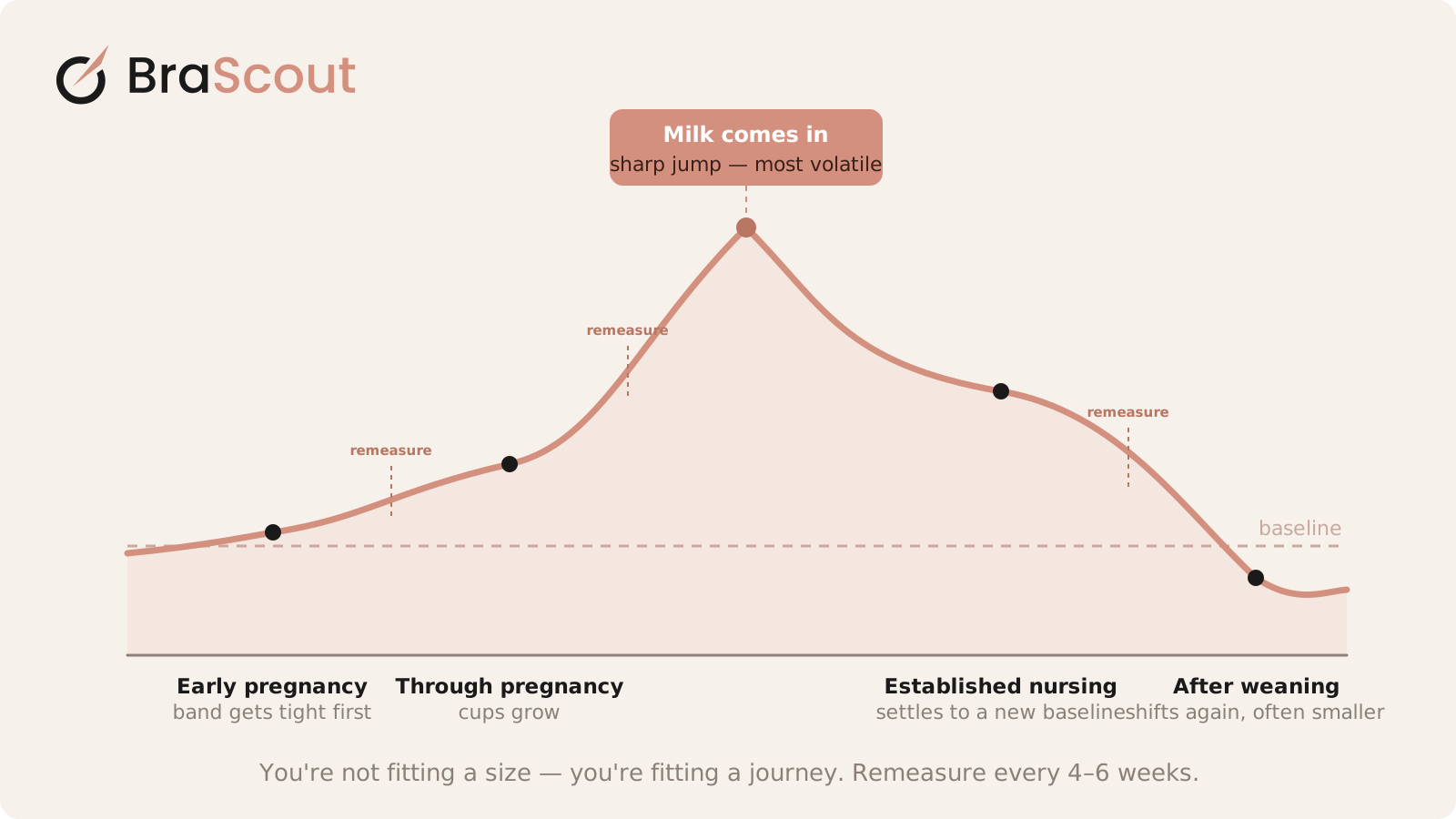
The single most useful thing to understand up front is that there isn't one "pregnancy size" to find and settle into. There's a journey, and it has stages:
- Early pregnancy: your ribcage expands to make room, so the band gets snug first — often before your cups change much at all.
- Through pregnancy: your breasts grow steadily heavier and fuller as your body prepares.
- When your milk comes in: a few days after birth, things can change fast and dramatically — this is the most volatile window of the whole journey.
- Established nursing: your size settles into a new baseline (often different from your pre-pregnancy one) that still fluctuates a little around feeds.
- After weaning: everything shifts again, usually settling smaller — frequently to a size that isn't quite what you started with.
So the reframe that makes all of this easy: you're not fitting a size, you're fitting a journey. Once you expect the change, you stop fighting it.
The golden rule: remeasure every 4–6 weeks
Because you're a moving target, the size you measured two months ago is fiction by now. So the whole strategy comes down to one habit: remeasure yourself every four to six weeks through pregnancy and nursing, and buy for the body you have today. The practical consequence — and this saves real money and frustration — is to resist stocking up on a flattering haul of one size. Buy a couple that fit now, wear them out, remeasure, re-buy. A drawer full of bras in a size you outgrew in three weeks helps no one. (Our measuring guide covers the how; here it's the how often that matters.)
What to wear at each stage
This is about the type of bra, stage by stage — the specific kit and checklist for nursing lives in nursing bra essentials. As strategy:
- Pregnancy: soft, stretchy, and wire-free or flexible — something with give that can grow with you rather than something rigid you'll outgrow. A band that can be extended (a cheap bra extender buys you weeks) is your friend here. Comfort and adaptability beat structure.
- Around birth and the milk coming in: this window is the most unpredictable, so lean fully into soft, stretchy, non-restrictive. It's not the moment for anything fitted or firm.
- Established nursing: a settled-but-still-fluctuating size, plus you'll want easy feeding access — which is where the nursing-specific kit comes in. Still soft, still flexible.
- Weaning and after: once things feel stable for a few weeks, do a proper remeasure and rebuild around your new baseline. Don't assume you're back to your old number — most people aren't.
The one thing to genuinely avoid: too tight
Everywhere else on this site, a firm band is the hero. Here, there's an important exception worth taking seriously. While you're nursing, a bra that's too tight — particularly a rigid one pressing into the breast — can do more than feel uncomfortable: persistent compression can contribute to blocked milk ducts and to mastitis, a painful infection. That's the real reason soft, flexible, wire-free styles are the default through this stage — it isn't only about comfort, it's about not compressing tissue that specifically shouldn't be compressed right now.
So keep things gentle, and trust your body's signals. If a part of your breast becomes red, hot or painful, or you start to feel unwell or fluish, that's a contact-your-midwife-or-doctor situation — not a wait-and-see one. A bra can help you avoid the conditions that lead there, but anything that's actually started belongs with a professional, quickly.
Find each new baseline as you go
Through all this change, the anchor is knowing the size you are right now. Use it whenever you remeasure to reset your baseline — free, about two minutes — then buy for today, not for three weeks ago.
Find my sizeBrands built for changing size and easy nursing access, with stretch and drop-cup designs:
BraScout may earn a commission if you buy through these links, at no extra cost to you. See our Affiliate Disclosure.
Keep reading:
- Got the sizing strategy? Here's the actual kit to own → Nursing Bra Essentials
- The how behind every 4–6 week remeasure → How to Measure Your Bra Size
- Skin more reactive while your body's changing? → Bras for Sensitive Skin
Frequently asked questions
Does your bra size change during pregnancy?
Yes, and usually more than once. Your ribcage expands early in pregnancy, so the band gets tight first; your breasts grow through the months that follow; and they change again, often dramatically, when your milk comes in after birth. It's completely normal for your size to shift several times across roughly 18 months.
How often should I remeasure during pregnancy and nursing?
Around every 4 to 6 weeks. Your body is a moving target through this whole period, so a measurement from a couple of months ago won't be accurate anymore. Measure for the size you are now, and plan to re-buy a few times as you change rather than stocking up on one size.
Can a bra that's too tight cause problems when breastfeeding?
Yes, and this is the one to take seriously. A too-tight bra, especially a rigid one pressing on the breast while you're nursing, can contribute to blocked ducts and mastitis. Choose soft, flexible, wire-free styles that don't compress, and if part of your breast becomes red, hot or painful, or you feel unwell, contact your midwife or doctor.
Should I wear underwire during pregnancy and nursing?
Most people are more comfortable in soft, wire-free or flexible bras through this time. A rigid wire can press uncomfortably as you grow and change, and avoiding compression matters more while nursing. Wire-free, stretchy and adjustable is the safer, comfier default for a body that's still changing.